Analyze infrastructure’s transformation into a geopolitical power player and master the investment strategies needed to navigate the collision of statecraft and private capital.

What happens when governments can't fund infrastructure anymore? A $1.6 trillion private asset class that doesn't recognize itself in the mirror. In the 2020s, infrastructure has entered a battlefield where geopolitics, government agendas, and investor returns collide.
We trace infrastructure's evolution from a nation-building mechanism to one of the most integrated asset classes in modern investing. In this episode, we explore a central tension: is infrastructure still a stable, boring, income-generating asset, or has it become a bigger bet on which governments can actually execute their vision? Joined by Peter Blue of Franklin Templeton and Gautam Bhandari of I Squared, we dive into one of the oldest asset classes in human history.
Key learning outcomes include:

Chartered Alternative Investment Analyst Association
CAIA Association is a global network of forward-thinking investment professionals, redefining the future of capital allocation in a world where traditional and alternative investments are converging at an unprecedented pace. United by a commitment to improving investment outcomes, we lead with authority, educate to inspire, and connect people who turn insight into action. CAIA Association creates dynamic and captivating learning experiences designed to engage investment professionals at every level. Its programs – the CAIA Charter and the CAIA.nxt™ platform – offer critical levels of access to a comprehensive curriculum that equips the investment community with the skills and knowledge needed to build modern portfolios. CAIA Association is a global member-driven community of more than 14,000 professionals, united by a shared commitment to improving investment outcomes and building a more aligned, principled capital market system.
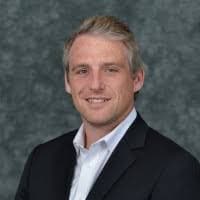
Head of Private Market Solutions, Franklin Templeton
Peter Blue, CFA, CAIA, FRM, serves as the Head of Alternative Solutions (also referred to as Head of Private Market Solutions) at Franklin Templeton Investment Solutions. He specializes in designing and managing multi-asset investment solutions for institutional clients, with a focus on private markets including private equity, private credit, real estate, and infrastructure. Previous Experience: QS Investors: Investment Analyst (quantitative multi-asset and equity manager) prior to its 2020 merger into Franklin Templeton. Legg Mason: Alternatives Product Specialist. Prior Roles: Held positions in product and business development at Guggenheim Partners, AlphaMetrix, and Cambridge Associates. Credentials: Holds the Chartered Financial Analyst (CFA), Chartered Alternative Investment Analyst (CAIA), and Financial Risk Manager (FRM) designations. Academic Background: Graduated magna cum laude with a Bachelor of Science in Business Administration from Washington & Lee University. Memberships: Active member of the CFA Society New York and the Global Association of Risk Professionals (GARP). He frequently contributes to industry discussions regarding the evolution of private markets, notably discussing the rise of evergreen funds versus traditional drawdown structures and the changing landscape of infrastructure investing.
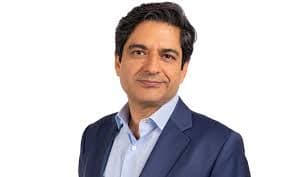
Co-Founder & Managing Partner, I Squared Capital
Gautam Bhandari is a Co-Founder, Managing Partner, and the Global Chief Investment Officer (CIO) at I Squared Capital, an independent global infrastructure investment manager. Current Role & Leadership Global CIO: Appointed as the firm's first official Global CIO in May 2023. Strategic Oversight: Manages investment strategies and portfolio growth across North America, Europe, and Asia. Committee Memberships: Sits on the firm's Executive, Operating, and Investment Committees. Board Leadership: Chairs the boards of several I Squared Capital portfolio companies globally. Investment Achievements Fund Launches: Oversaw the expansion of the firm’s strategy, including the ISQ Global InfraTech Fund, the Global Infrastructure Credit Fund, and the inaugural energy transition fund. Mid-Market Focus: Pioneered the firm's "mid-market" approach, focusing on platform investing in sectors like digital infrastructure and clean energy. Performance: In 2023 alone, he oversaw over $4.9 billion in deals and $2.8 billion in realizations. Recognition: Named Infrastructure Personality of the Year in the 2023 PEI Infrastructure Investor Awards. Professional Background I Squared Capital Founding: Co-founded the firm in 2012 alongside Sadek Wahba and Adil Rahmathulla after leaving Morgan Stanley. Morgan Stanley (2001–2012): Spent 11 years as a Managing Director and served as the Head of Asia for Morgan Stanley Infrastructure Partners. Education: Holds an MBA from the NYU Stern School of Business (1999–2001). Infrastructure Super-Cycle: Bhandari has recently highlighted a "global infrastructure super-cycle," driven by demand for AI-related digital infrastructure and the energy transition. Strategic Focus: He emphasizes that the "investible universe" is expanding toward decentralized models and digital networks.
